
How Municipal Court Warrants Work
A municipal-court warrant comes from a city court's own docket, and Caroline County simply has no such court to ask. Both towns sit inside the county's court system. Don't read a town ordinance, a police contact, or a code page as proof of a municipal warrant portal, because none of those things creates one. For a traffic ticket or misdemeanor charge, the right door is Caroline General District Court. Felonies and other general-jurisdiction criminal files belong to Circuit Court, while juvenile and domestic matters go to JDR. The Caroline County Sheriff's Office handles service of warrants and takes questions about wanted-person safety.
Municipal Courts Across Caroline County
The 2020 Census incorporated-place table for Caroline County lists exactly two towns: Bowling Green and Port Royal. Neither town posts a municipal criminal court or a public warrant lookup. A town's police power and its court docket are different things entirely. The missing portal means no online municipal warrant list exists, not that local officers can never serve process. Only the issuing court can confirm or recall a warrant.
| Town | Public local source | Separate municipal court portal found | Documented court route |
|---|---|---|---|
| Bowling Green | Town Police and town directory | No | Caroline GDC, Circuit, or JDR by case type |
| Port Royal | Town Hall, code, and council | No | Caroline GDC, Circuit, or JDR by case type |
Caroline County Municipal Warrant Checks
With no town portal to use, go straight to the Caroline County court and Sheriff channels. Virginia's case-information system lets you search by Caroline locality, name, case number, or hearing date for public matters. Ask General District Court about traffic or misdemeanor records, Circuit Court about felony files, and JDR about juvenile or domestic cases. If you worry about wanted status, the Sheriff's FAQ is clear that details are not released by phone.
- Identify whether the notice names a town code issue, traffic case, or criminal charge.
- Use the official state court link for the court that handles that subject.
- Ask the clerk whether the case file shows a court order or later action.
- Use the Sheriff’s safety instruction if a law-enforcement warrant is the concern.
- Consult counsel before a surrender, payment, or statement.
The Caroline GDC page is the documented traffic and misdemeanor court route.
Municipal Warrants: What They Show
No live municipal warrant record exists in Caroline County to inspect, so treat these field descriptions as a map of court process rather than a town record row. A court or agency may hold different pieces of the file. Restricted material stays out of public view.
| Example | SCHEMA ONLY No local public sample row |
|---|---|
| Issuing body | Exact court or magistrate shown on the actual order |
| Underlying case | Case number, locality, hearing date, and court |
| Process label | Summons, arrest warrant, FTA order, capias, or other wording |
| Service or return | May sit in a law-enforcement record separate from the docket |
| Next step | Ask the office holding the record; no town portal was located |
Caroline County Warrant Portal Not Located
The distinction between town records and court records trips people up. Bowling Green's official code gives its town police constable powers in criminal cases, yet the town publishes no separate municipal criminal docket, warrant list, or citation portal. Port Royal's official site offers town hall details, its code, and council information, but no police department page and no municipal court route. So skip any unverified "town warrant search" link that promises more than these offices actually provide. What's absent here is a public list, not the power to serve process. A local officer in Caroline County can still act on a warrant; you just will not find it posted by the town. The court that issued it remains the only office that can confirm, recall, or quash it, so route your question there.
Caroline County Bowling Green Warrant Routes
Bowling Green Police serves roughly 1,100 residents from 117 Butler Street, reachable at 804-994-4056. Its town page covers police service and local government, nothing more. A court-file question still belongs with the right Caroline County court. General District Court sits at 111 Ennis Street, 804-633-5720, while the Sheriff and Circuit Court share Courthouse Lane. Those code provisions granting town police their powers do not create a municipal court. Someone holding a traffic notice should ask the GDC clerk about the docket instead of expecting the police page to confirm a recall. For the town's official municipal interface, see the Bowling Green town site, which shows the local-government role plainly.
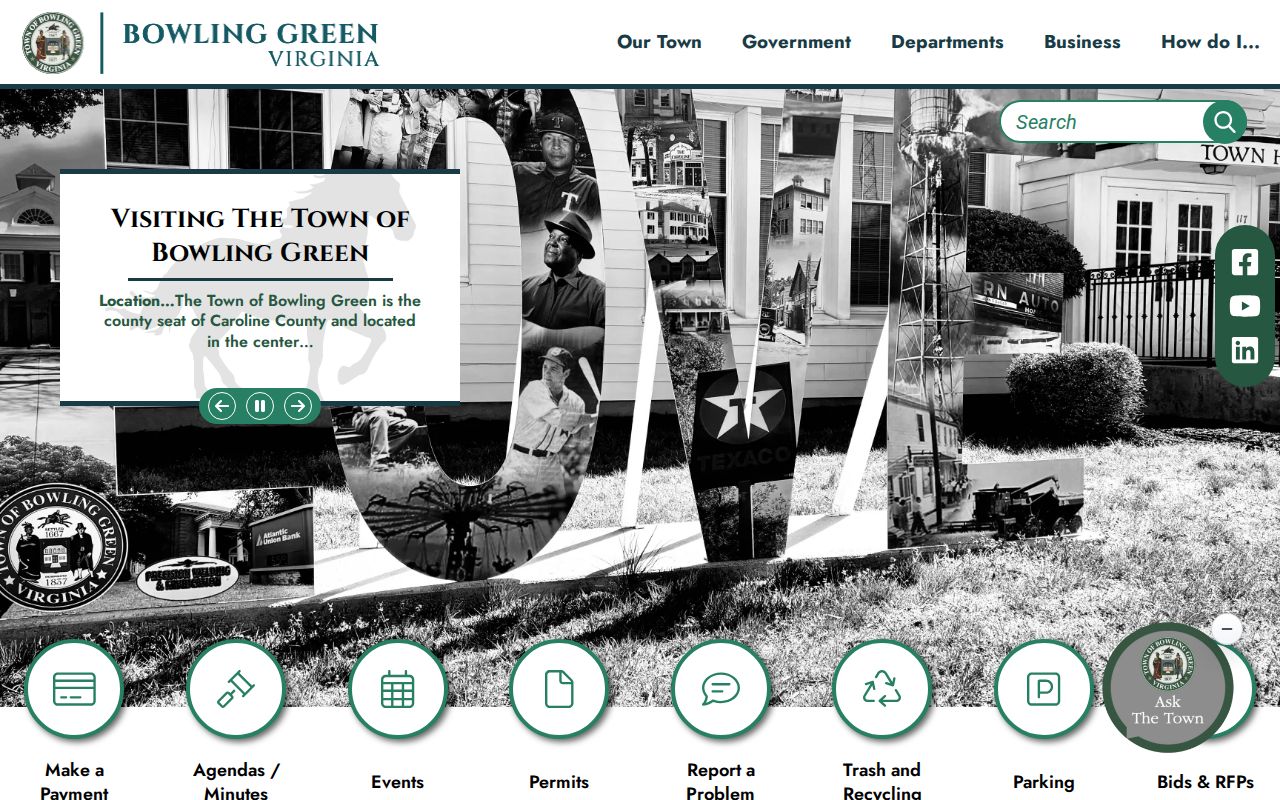
The town site helps identify the local government, not a separate criminal-court search.
Caroline County Port Royal Warrant Records
Port Royal Town Hall sits at 419 King Street, with mail at P.O. Box 29 and a town-government phone at 804-742-5331. Its official site carries code and council information. The town posts no public police page, no municipal criminal-court page, and no town warrant list or warrant-search portal. Town Hall can route municipal-government questions, but it is not a warrant-record office for Caroline County. A traffic case goes to GDC. A possible law-enforcement warrant goes through the Sheriff FAQ and dispatch. Custody questions belong to Pamunkey Regional Jail, which will not confirm warrant status.
Caroline County Warrant Routing Follows Case Type
In Caroline County, routing follows case type: GDC for traffic and misdemeanors, Circuit for felonies and general-jurisdiction criminal files, JDR for juvenile and domestic matters. The clerks hold the court records, and the Sheriff handles service plus law-enforcement record requests. Virginia's case-information system is a court-case route, not a public active-warrant database. For a countywide map of courts and offices, the Caroline County warrant-records overview sorts out the court, Sheriff, records-request, and custody channels.
Clearing a Municipal Court Warrant
Neither town runs its own public municipal court route in Caroline County, so no walk-in recall form or municipal warrant recall process exists for either. If a town citation points to Caroline GDC, ask that clerk or a lawyer which motion, appearance, payment, or hearing fits your case. One caution: a payment plan covers fines and costs only. It does not guarantee that an arrest order or an FTA ruling gets recalled.
Confirm the issuing court: a trip to town hall or a call to police is not a warrant-clearance appointment. No local bond window, accepted payment method, or same-day process has been published in Caroline County.
The Caroline County Sheriff's FAQ will not disclose wanted-person details by phone. It tells you to come to the office or request a deputy through dispatch.
Caroline County Warrant Plans and Recall
Payment trouble has options in Caroline County. The GDC's local policy allows extensions, deferred payment, installments, and in some cases community service toward fines and costs. Circuit Court handles relief differently, through a written request. Neither plan lifts a warrant by itself. Before assuming anything, ask the clerk whether a separate FTA, capias, or arrest order sits on the case. For juvenile or domestic matters, go through the JDR clerk or a lawyer, since Virginia Code §16.1-301 restricts juvenile law-enforcement records. Never seek or share a child's identity or record details.